
WinterFest
2026 Dates Coming Soon
FREE for Members, $24 Adults, $19 Children (2-12) and Seniors (65+)
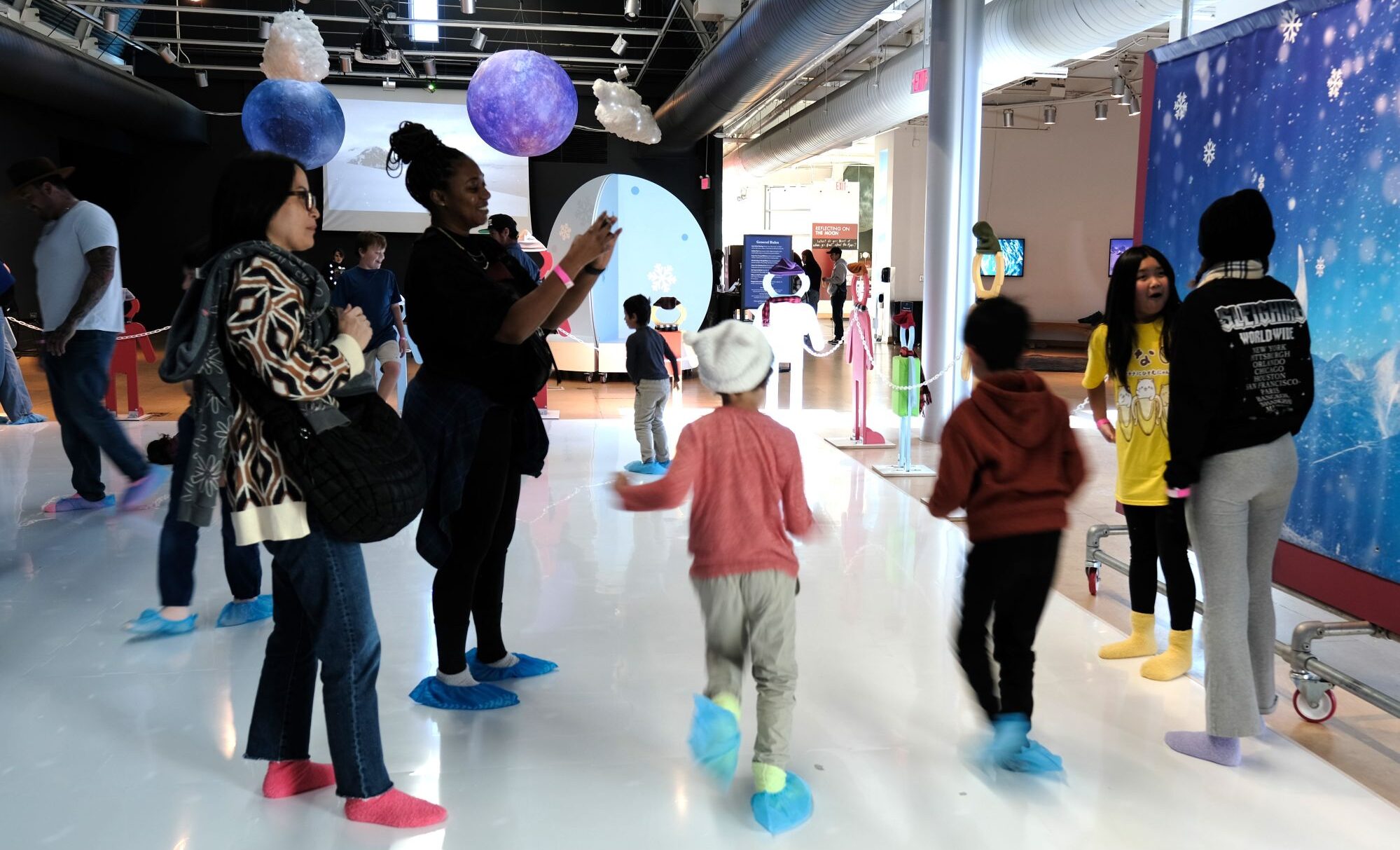
Join us for a two-day celebration that marks the launch of Winter at Chabot! The Center comes alive with festive energy. Enjoy live music, face painting, and special activities that blend holiday cheer with cosmic exploration. Meet Chabot’s science and astronomy experts as they share real research about icy worlds, planetary missions, and the search for life beyond Earth. From sparkling décor to hands-on discovery, WinterFest is the perfect start to a season filled with imagination, science, and family fun.
 2025 Highlights
Your winter adventure begins at the Chabot Space Station, where frozen frontiers await! Step through the portal and prepare to journey across some of the coldest, most captivating worlds in the cosmos: the ocean-covered moon Europa, the dazzling ice plains of Pluto, and a mysterious icy exoplanet orbiting a distant star.
 Gingerbread Rovers
Put your engineering skills (and your sweet tooth) to the test in our Edible Mars Rover Lab! Learn about the real rovers exploring Mars, then design and build your own gingerbread decorated version using graham crackers, frosting, and other delicious materials. It’s a fun, creative workshop that combines science, engineering, and holiday cheer all in one tasty mission. Each ticket includes one rover kit. A maximum of two people may work on each rover. Children must be accompanied by an adult.
 NEW Planetarium Show!
SPACETIME
Telescopes built to detect electromagnetic waves, like visible light, infrared, radio waves, and other forms, give us the ability to see objects and events at great distances in the universe, and far back in time. Today, a new type of instrument, the “gravity wave telescope”, is giving us the power to “hear” cosmic events beyond the sight of ordinary telescopes. Gravity waves are ripples in spacetime created by events like collisions between black holes, and powerful processes that took place in the earliest times of our universe.
The Dutch Black Hole Consortium is currently building an enormous underground gravity wave detector, called the Einstein Telescope. When completed, this instrument will provide unprecedented insight into the nature of the universe and its origin, allowing scientists to probe cosmic secrets that light waves cannot illuminate.
Generously sponsored by